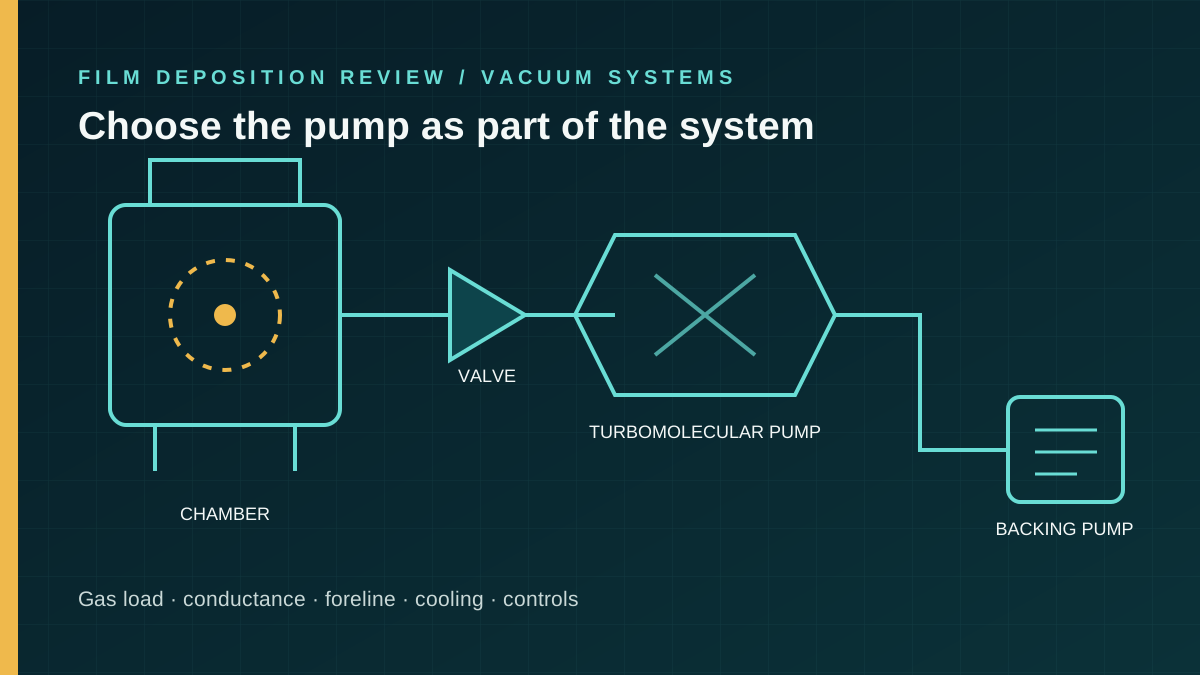
A slow pump-down curve is often blamed on the pump. In practice, the chamber may be supplying gas faster than the system can remove it. Water on internal surfaces, elastomer seals, oils, porous materials and process residue can all become continuing gas sources.
Look at the shape of the pump-down curve
A large opening or major leak usually produces a different response from gradual desorption. If pressure improves quickly at first and then slows, surface gas and conductance deserve attention. A pressure-rise test after isolation can add useful evidence, although it does not locate the source by itself.
Water is a common hidden load
After a chamber is opened to humid air, water molecules adsorb on the walls. Under vacuum they leave gradually. Warm surfaces, dry purge practice and sufficient pumping time can reduce this load, but the allowable treatment depends on seals, sensors, coatings and process hardware.
Material choices continue to matter
Items that are acceptable in ordinary machinery may behave poorly in high vacuum. Adhesives, cable insulation, lubricants and trapped volumes should be reviewed before they enter the chamber. Cleaning should remove residue without introducing a new contaminant.
Do not diagnose by one pressure reading
Compare a clean baseline with the current pump-down curve. Check valve position, gauge range, pump condition and line conductance. Then separate leak testing from outgassing investigation. A structured sequence avoids replacing expensive components while the actual problem remains on a surface or seal.