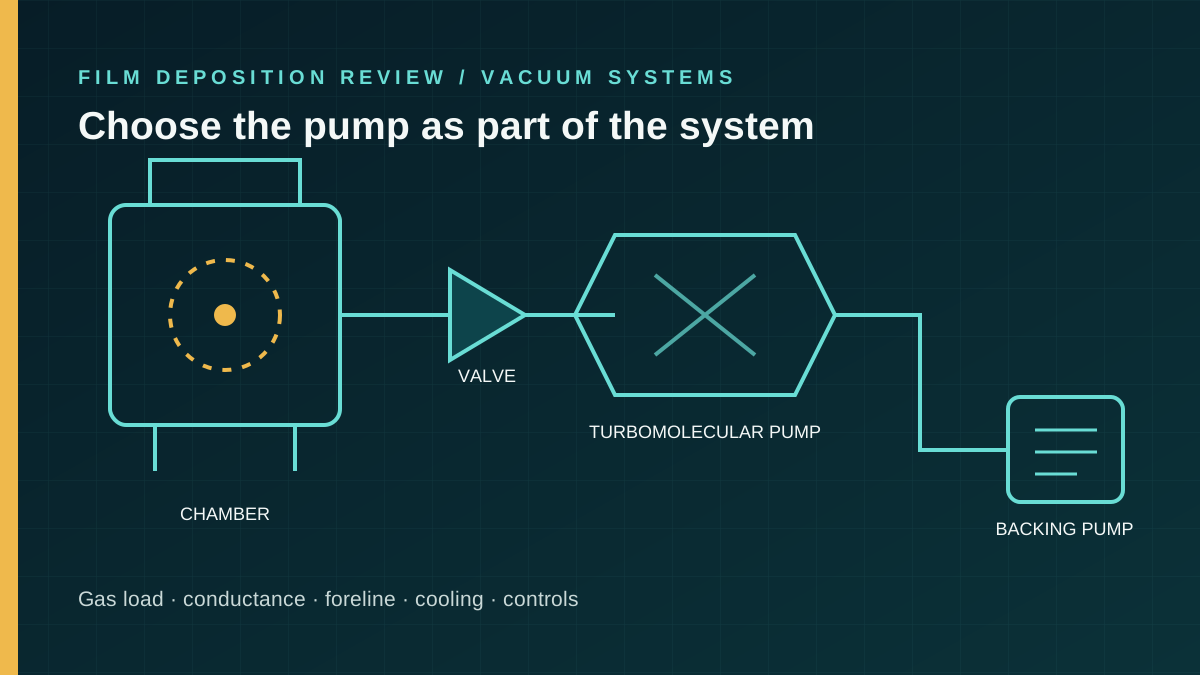
Vacuum pump comparisons often begin with pumping speed and end with ultimate pressure. These numbers describe different parts of performance. Treating either one as a complete answer can lead to a system that looks strong on paper but pumps down slowly or struggles under the real gas load.
Pumping speed describes flow at the inlet
Pumping speed is a volumetric flow rate at a stated pressure. The chamber does not automatically receive the nameplate speed. Pipe diameter, elbows, valves, traps and narrow ports add flow resistance. The effective speed at the chamber can therefore be much lower than the pump rating.
Ultimate pressure is a system result
The lowest pressure reached depends on more than the pump. Seal materials, lubricants, chamber cleanliness, water vapor, leaks and gases released from internal surfaces all contribute. A very low pump specification cannot compensate for a dirty chamber or poor conductance indefinitely.
Operating pressure may matter more
Deposition equipment normally works with process gas, vaporized source material or both. The useful question is whether the pump train can maintain the required operating pressure while handling this load. A process may need stable throughput and recovery between cycles rather than the lowest possible empty-chamber reading.
Build the comparison around the chamber
Record chamber volume, target pressure, pump-down time, process gas flow, expected vapor load and the conductance of the connecting line. Then ask for an effective-speed calculation and a pump-down curve. This makes it easier to distinguish a realistic system design from a single impressive catalog number.